
Doulber Escape From the 80s v1.03 serial key or number
Doulber Escape From the 80s v1.03 serial key or number
Forscan Key Crack
Find your serial number (phil&teds products)

To help register your product online we ask that you enter the serial number of your product (when available). Below is a list of common products and the location of their serial numbers.
If you can't find the product name you are looking for when filling out our registration form, please type in the type of product you have e.g, stroller, highchair, and any serial number if available.
If your serial number doesn't match the examples below please enter whatever number is on your product(s). There is no wrong way to enter your numbers.
Strollers | Travel Cots | Highchairs | Child Carrier Packs | Carseats | Accessories
PUSH - strollers, buggies, joggers and double kits
| Product name and version | Serial number hint | |
    | inline™ buggy range 2019+ dot™, sport™, dash™, voyager™ | The serial number is located on the inside of the leg that runs down to the left rear wheel. It looks like: AB 0119/0117/0001 |
 | Classic black | The serial number is on a white sticker located either behind the one hand fast fold or on the outside of the left hand hinge. See more details here. It looks like: PTRV 0312/1234 |
  | Classic red | The serial number is located on the inside of the folding hinge, the sling may need to be pushed aside to view. See more details here. It looks like: PTRV 0312/1234 |
  | legacy dash | Manufactured between 2008-2011. The serial number is located on the inside of the folding hinge, the sling may need to be pushed aside to view. See more details here. |
 | dash | Manufactured from 2015. Serial number can be found on a white sticker appended to the inner side of the bottom left rear cradle (when viewing the pram from behind). See more details here. It looks like: PTRV 0915/1234 |
 | DOT | The serial number can be found underneath the plastic footwell on a white sticker. See more details here. It looks like: PTRV 0312/1234 |
  | e3 twin | The serial number is located on the inside of the folding hinge, the sling may need to be pushed aside to view. |
 | e3 v1, e3 v2 | The serial number is located on the inside of the folding hinge, the sling may need to be pushed aside to view. See more details here. It looks like: PTRV 0312/1234 |
  | explorer, explorer replacement frame | The serial number is on a white sticker located either behind the one hand fast fold or on the outside of the left hand hinge. See more details here. It looks like: PTRV 0312/1234 |
  | hammerhead | The serial number is on a white sticker located either behind the one hand fast fold or on the outside of the left hand hinge. See more details here. It looks like: PTRV 0312/1234 |
 | Go | The serial number is located on the inside of the leg that runs down the right rear wheel. See more details here. It looks like: AB 1217/1234 |
 | mod | The serial number is located on the inside of the leg that runs down to the left rear wheel. See more details here. It looks like: AB 0316/1234/1234 |
  | phil&teds nav v1, phil&teds nav v2, sport 2015 | The serial number can be found underneath the plastic footwell on a white sticker. See more details here. It looks like: PTRV 0312/1234 |
 | Promenade | The serial number can be found on the left part of the aluminium frame that runs alongside the parcel tray. See more details here. It looks like: GK 0312/0123B/12345 |
  | S3, S4 (available in certain markets only) | The serial number is located on the inside of the folding hinge, the sling may need to be pushed aside to view. See more details here. It looks like: PTRV 0312/1234 |
   | smart v1 / v2, smart lux | The serial number is located on the inside of the aluminium leg, that runs down to the right back wheel. See more details here. It looks like: GK 0312/0123B/12345 |
 | smart v3 (2016+) | The serial number is located on the inside of the leg that runs down to the left rear wheel. See more details here. It looks like: AB 0316/1234/1234 |
 | sport v1 / v2 (pre 2015) | Manufactured between 2007 and 2009. The serial number is located on the inside of the folding hinge, the sling may need to be pushed aside to view. See more details here. |
 | sub4 jogger | It is underneath the chassis on the plate where the rear wheels join the chassis and also the suspension spring attaches. It looks like: PTRV 0312/1234 |
 | twin | The serial number is located on the inside of the folding hinge, the sling may need to be pushed aside to view. See more details here. It looks like: PTRV 0312/1234 |
  | verve v1 / v2 | The serial number is located on the inside of the aluminium leg, that runs down to the left back wheel. See more details here. It looks like: GK 0312/0123B/12345 |
  | verve v3 | The serial number is located on the inside of the aluminium leg, that runs down to the left back wheel . See more details here. It looks like: GK 1213/0865B/12345 |
| vibe v1 / v2 | The serial number is located on the inside of the aluminium leg, that runs down to the left back wheel. See more details here. It looks like: GK 0312/0123B/12345 |
 | vibe v3 | The serial number is located on the inside of the aluminium leg, that runs down to the left back wheel . See more details here. It looks like: GK 1213/0865B/12345 |
 | voyager | The serial number can be found on a sticker appended to the inner side of the bottom left rear cradle (when viewing the pram from behind). See more details here. It looks like: PTRV 0915/1234 |


SLEEP - Portable Travel Cots & Bassinets
CARRY - Child carrier front and back packs
| Product name and version | Serial number hint | |
 | airlight | The serial number/manufactured date is located inside the front pocket under warning label. It looks like: 2/14 |
 | parade carrier | The serial number is located inside the left side pocket. The tag is right at bottom of the pocket. It looks like: JAN-2014 |
  | metro & escape carriers | The serial number is located inside the carrier. It looks like: JAN-2014 |
DRIVE - Car seat capsules and booster seats
| Product name and version | Serial number hint | |
 | alpha | Serial number is located under front right of the capsule (as you are looking at it from the front). It looks like: AB 0312/0123/12345 |
 | bebe | A date stamp is embossed to the back of the shell. Centre number is the year, clock hand points to month of manufacture. See more details here. |
 | bebe * [star] | A date stamp is embossed to the back of the shell. Centre number is the year, clock hand points to month of manufacture. See more details here. |
| bebe hs v1 | A date stamp is embossed to the back of the shell. Centre number is the year, clock hand points to month of manufacture. See more details here. |
| bebe hs v2 | A date stamp is embossed to the back of the shell. Centre number is the year, clock hand points to month of manufacture. See more details here. |
 | bebe recline v1 | A date stamp is embossed to the back of the shell. Centre number is the year, clock hand points to month of manufacture. See more details here. |
| bebe recline v2 | Date stamp is molded into the back of the shell. Centre number is year, clock hand points to month. See more details here. |
 | cocoon genius | The serial number is imprinted on plastic shell behind fabric on seat back. Locate the dot in the matrix and read the year row (listed to left of matrix) and then read the month column (listed on top of matrix) See more details here. Please enter as YYYY-MM like: 2013-06 |
 | cocoon travelfix | The serial number/manufacture date can be found on a white sticker underneath the seat. |
 | columbus v1 | A date stamp is embossed to the back of the shell. Centre number is the year, clock hand points to month of manufacture. See more details here. |
 | columbus v2 | A sticker with Production Date can be found on the lower right-hand side of the base. If you are asked 'serial number' for a support form, please enter this Production Date. See more details here. It looks like: 2016/03/17 |
 | discovery | A date stamp is embossed to the back of the shell. Centre number is the year, clock hand points to month of manufacture. See more details here. |
 | discovery v2 | A date stamp is embossed to the back of the shell. Centre number is the year, clock hand points to month of manufacture. |
 | evolution | A date stamp is embossed to the back of the shell. Centre number is the year, clock hand points to month of manufacture. Please enter like (YYYY MM): 2012 03 |
 | optimum | The optimum has the serial number on the base of the capsule and the base of the in-car base. See more details here. It looks like: CS08SDK12345SC1234 |
 | quest | A date stamp is embossed to the back of the shell. Centre number is the year, clock hand points to month of manufacture. See more details here. |
 | tott | A date stamp is embossed to the back where the child rests, under the fabric. The number in the middle is the year of manufacture, clock hand points to the month. See more details here. |
 | tott XT v1 | A date stamp is embossed to the back of the shell. Centre number is the year, clock hand points to month of manufacture. See more details here. |
| tott XT v2 | A date stamp is embossed to the back of the shell. Centre number is the year, clock hand points to month of manufacture. See more details here. |
| tott XTR | A date stamp is embossed to the back of the shell. Centre number is the year, clock hand points to month of manufacture. See more details here. |
ADAPT - Buggy Accessories including double kits
| Product name and version | Serial number hint | |
| Classic black double kit | The serial number is located on the right hand leg, above the nib spring or release lever. See more details here. It looks like: RV0321/THDK/01234 | |
| Classic red double kit | The serial number is located on the right hand leg, above the nib spring or release lever. See more details here. It looks like: RV0321/THDK/01234 | |
| dash double kit | The serial number is located on the right hand leg, above the nib spring or release lever. See more details here. It looks like: GK 0312/0123B/12345 | |
 | Dash V5 double kit | The serial number is located on the left hand side of the frame. It looks like: DK 0116/1234 |
| e3 v1 double kit | The serial number is located on the right hand leg, above the nib spring or release lever. See more details here. It looks like: RV0321/THDK/01234 | |
| e3 v2 | The serial number is located on the inside of the folding hinge, the sling may need to be pushed aside to view. See more details here. It looks like: PTRV 0312/1234 | |
| e3 v2 double kit | The serial number is located on the right hand leg, above the nib spring or release lever. See more details here. It looks like: RV0321/THDK/01234 | |
| explorer double kit | The serial number is located on the right hand leg, above the nib spring or release lever. See more details here. It looks like: RV0321/THDK/01234 | |
| DOT double kit, phil&teds nav double kit v1, phil&teds nav double kit v2, sport 2015 double kit | The serial number is located on a small sticker on the frame of the double kit, above the end of the zip. Pull the seat fabric away from the frame if necessary to view. It looks like: RV0321/THDK/01234 | |
| hammerhead double kit | The serial number is located on the right hand leg, above the nib spring or release lever. See more details here. It looks like: RV0321/THDK/01234 | |
| Promenade Doubles Kit | The serial number is on right side foot end, between aluminium frame and fabric side. See more details here. It looks like: GK 0312/0123B/12345 | |
| sport double kit | The serial number is located on the right hand leg, above the nib spring or release lever. See more details here. It looks like: RV0321/THDK/01234 | |
| verve double kit | The serial number is located on the right hand leg, above the nib spring or release lever. See more details here. It looks like: GK 0312/0123B/12345 | |
| vibe double kit | The serial number is located on the right hand leg, above the nib spring or release lever. See more details here. It looks like: GK 0312/0123B/12345 | |
| vibe/verve (v3) double kit | The serial number is located on the right hand leg, above the nib spring or release lever. See more details here. It looks like: GK 0312/0123B/12345 | |
 | voyager double kit | The serial number is located on the left hand side of the frame. It looks like: DK 0316/1234 |
 | Freerider (pre-2016) | The serial number can be found underneath, on a white sticker. See more details here. It looks like: FRRV 0312/1234 |
 | Freerider (2016+) | The serial number can be found underneath, on a white sticker. It looks like: AB 0312/0123/1234 |
Comments
0 comments
Article is closed for comments.
IBM PC keyboard
The keyboard for IBM PC-compatible computers is standardized. However, during the more than 30 years of PC architecture being frequently updated, many keyboard layout variations have been developed.
A well-known class of IBM PC keyboards is the Model M. Introduced in 1984 and manufactured by IBM, Lexmark, Maxi-Switch and Unicomp, the vast majority of Model M keyboards feature a buckling spring key design and many have fully swappable keycaps.
Keyboard layouts[edit]
The PC keyboard changed over the years, often at the launch of new IBM PC versions.
| Name | Keys | Description | Image |
|---|---|---|---|
| Model F (PC/XT) | 083 | Original left-hand side function key (F key) columns, F1 through F10; electronically incompatible with PC/AT keyboard types | 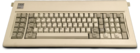 Introduced with original IBM PC August 1981. Introduced with original IBM PC August 1981. |
| Model F (PC/AT) | 084 | Additional (system request) key; numerical block clearly separated from main keyboard; added indicator LEDs for Caps/Scroll/Num lock |  Introduced August 1984. Introduced August 1984. |
| Model M (Enhanced) | Additional navigation and control keys; 12 F keys in separate row along top, grouped F1–4, F5–8, and F9–12. Early models of Enhanced keyboard (notably those manufactured by Northgate Ltd.) maintained the layout with function keys on the left side, arranged in two columns of six pairs. This layout was more efficient for touch typists but was superseded in the marketplace by that with F-keys along the top. PS/2 released April 1987. There are different versions of the Enhanced keyboard layout: | ||
| 101 | standard US layout
| 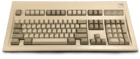 Introduced April 1986.[1] Introduced April 1986.[1] | |
| 102 | European layouts
|  Introduced April 1986. Introduced April 1986. | |
| 103 | Korean layout
| ||
| 104 | Brazilian ABNT NBR 10346 variant 2 (alphanumeric portion) and 10347 (numeric portion).
|  | |
| 106 | Japanese JIS layout
|  | |
| Windows[2] | Additional MS Windows key (×2) and Menu key added (one MS Windows key to the right of the left control key, the other and the Menu key to the left of the right control key).[2][3] Introduced in the Microsoft Natural keyboard for use with the MS Windows 95 operating system.[4] Most modern PCs, whether supplied with MS Windows or not, are now delivered with this layout.[5] Like the Enhanced layout, there are regional variants of the Windows keyboard layout:[5] | ||
| 104 | standard US layout (as above) |  | |
| 105 | European layouts[5] (as above) |  | |
| 106 | Korean layout (as above) |  | |
| 107 | Brazilian ABNT NBR 10346 variant 2 (alphanumeric portion) and 10347 (numeric), as above |  | |
| 109 | Japanese layout (as above) | ||
Common additions to the standard layouts include additional power management keys, volume controls, media player controls, and miscellaneous user-configurable shortcuts for email client, World Wide Web browser, etc.
The IBM PC layout, particularly the Model M, has been extremely influential, and today most keyboards use some variant of it. This has caused problems for applications developed with alternative layouts, which require keys that are in awkward positions on the Model M layout – often requiring the pinkie to operate – and thus require remapping for comfortable use.[6] One notable example is the escape key, used by the vi editor: on the ADM-3A terminal this was located where the Tab key is on the IBM PC, but on the IBM PC the Escape key is in the corner; this is typically solved by remapping Caps Lock to Escape.[6] Another example is the Emacs editor, which makes extensive use of modifier keys, and uses the Control key more than the meta key (IBM PC instead has the Alt key) – these date to the Knight keyboard, which had the Control key on the inside of the Meta key, opposite to the Model M, where it is on the outside of the Alt key; and to the space-cadet keyboard, where the four bucky bit keys (Control, Meta, Super, Hyper) are in a row, allowing easy chording to press several, unlike on the Model M layout. This results in the "Emacs pinky" problem.[7]
Reception[edit]
Although PC Magazine praised most aspects of the 1981 IBM PC keyboard's hardware design, it questioned "how IBM, that ultimate pro of keyboard manufacture, could put the left-hand shift key at the awkward reach they did".[8] The magazine reported in 1982 that it received more letters to its "Wish List" column asking for the ability to determine the status of the three lock keys than on any other topic.[9]Byte columnist Jerry Pournelle described the keyboard as "infuriatingly excellent". He praised its feel but complained that the Shift and other keys' locations were "enough to make a saint weep", and denounced the trend of PC compatible computers to emulate the layout but not the feel.[10] He reported that the layout "nearly drove" science-fiction editor Jim Baen "crazy", and that "many of [Baen's] authors refused to work with that keyboard" so could not submit manuscripts in a compatible format.[11] The magazine's official review was more sanguine. It praised the keyboard as "bar none, the best ... on any microcomputer" and described the unusual Shift key locations as "minor [problems] compared to some of the gigantic mistakes made on almost every other microcomputer keyboard".[12]
"I wasn't thrilled with the placement of [the left Shift and Return] keys, either", IBM's Don Estridge stated in 1983. He defended the layout, however, stating that "every place you pick to put them is not a good place for somebody ... there's no consensus", and claimed that "if we were to change it now we would be in hot water".[13]
Standard key meanings[edit]
The PC keyboard with its various keys has a long history of evolution reaching back to teletypewriters. In addition to the 'old' standard keys, the PC keyboard has accumulated several special keys over the years. Some of the additions have been inspired by the opportunity or requirement for improving user productivity with general office application software, while other slightly more general keyboard additions have become the factory standards after being introduced by certain operating system or GUI software vendors such as Microsoft.
From mechanical typewriters[edit]
- selects the upper character, or upper case of letters. The Shift key in typewriters was attached to a lever that moved the character types so that the uppercase characters could be printed on the paper. Unlike mechanical typewriters, PC keyboards do not capitalize all letters properly when both shift keys are engaged simultaneously.[citation needed]
- selects upper case, or if shift is pressed, lower case of letters. In mechanical typewriters, it worked like the Shift key, but also used a lock to keep the Shift key depressed. The lock was released by pressing the Shift key.[citation needed]
- wraps to the next line or activates the default or selected option. ASCII keyboards were labeled CR or Return. Typewriters used a lever that would return the cylinder with the paper to the start of the line.
- produces an ASCII tab character, moving to the next tab stop.
From Teletype keyboards[edit]
- shifts the value of letters and numbers from the ASCII graphics range, down into the ASCII control characters. For example, CTRL-S is XOFF (stops many programs as they print to screen) CTRL-Q is XON (resume printing stopped by CTRL-S).
- produces an ASCII escape character. It may be used to exit menus or modes.
- is the tilde, an accent backspaced and printed over other letters for non-English languages. Nowadays the key does not produce a backspaceable character in US/UK keyboard layouts, and is used for 'not' or 'circa'.
- is a grave accent or backtick, also formerly backspaced over letters to write non-English languages; on some systems it is used as an opening quote. The single quote ' is normally used for an acute accent.
- is a circumflex, another accent for non-English languages. Also used to indicate exponentiation where superscript is not available.
- is an asterisk, used to indicate a note, or multiplication.
- is an underscore, which can be backspaced and overprinted to add emphasis, or in certain Programming Languages in place of a to form a compound word where the use of would yield several separate words.
- is a vertical bar, originally used as a typographic separator for optical character recognition. Many character sets break it in the middle so it cannot be confused with the numeral "1" or the letter "l" (in most EBCDICcodepages, vertical bar and divided vertical bar are separate characters). This character is often known as a "pipe" (after its use in Unix shells) or a "fencepost".
Invented for computers with video displays[edit]
- Function keys are the F-numbered keys. Their use varies by program; is often Help.
- Arrow keys (, , , ) move the cursor on the screen. When shifted, they select items.
- moves the cursor to the start of text, usually the left side of the screen.
- moves the cursor to the end of the current line.
- and move through the document by pages.
- (Delete) deletes the character after the cursor, or the selected items.
- (Insert) originally toggled between text insertion and overwrite modes. Importantly, it is involved along with Ctrl and Shift keys in keyboard shortcuts for copy (+) and paste (+) according to the IBM CUA user interface guidelines; the IBM CUA shortcuts are still widely supported by most current PC operating systems, and many PC users who learned those shortcuts between the late 1980s and the early 1990s may still find them more natural, convenient, or ergonomic than their "modern" Ctrl+X/C/V counterparts, given the close proximity of the Ctrl, Shift and Insert keys to the cursor movement keys. This particular role of the Insert key is often overlooked by modern-times documentation, if not hardware design, which tend to attribute to "Insert" only its more obvious, but much less frequently used and somewhat obsolete, original function.
- originally printed a text image of the screen. (On modern computers, + usually takes a screenshot.) With the Alt key, it switched to SysRq, a different keycode.
- toggles the state of the numeric keypad. When off, the keypad acts as arrow and navigational keys. When on, it is a 10-key number pad similar to a standard calculator. Preferences vary so much that a favorite default for this key can often be configured in the BIOS. The key continues to exist on keyboards with separate arrow keys to accommodate those who still prefer the toggleable keypad.
- is little-used. IBM documentation described it as "inactive", and the key's purpose was a mystery even to keyboard manufacturers.[14] In modern software, typing text usually causes previous text to scroll off the top of the screen or window. Some old programs could disable this and restart at the top of the window when scroll lock was pressed. The advantage is that the entire screenful of text does not shift, making it easier to read. Scroll Lock was also used to lock the cursor on its line and scroll the work area under it. In spreadsheets such as Microsoft Excel, it locks the cell pointer on the current cell, allowing the user to use the arrow keys to move the view window without moving the cell pointer. On some consoles (such as the Linux console), it prevents scrolling of messages until another key combination is pressed. Many hardware KVM switches use Scroll Lock to switch between the devices they control.
- pauses output or processing. In combination with Ctrl, it produces a keycode for Break. + traditionally stopped programs in DOS. + is also used to halt execution of the debugger in some programming environments such as Microsoft Visual Studio. In combination with the Windows key, it opens the System Properties window in Microsoft Windows environments.
- shifts the letters and numbers into the range above hex 0x80 where the international characters and special characters exist in the PC's standard character set. Alt plus a number typed on the numeric keypad produces special characters; see Windows Alt keycodes.
- (also known as the "super" key) is a quick way to open the Start menu in Microsoft Windows's standard Explorer shell, and can usually be configured to open the main menu in other operating systems. In Microsoft Windows, the Windows key can also be used in combination with other keys to perform desktop-related actions (e.g. + to minimize all open windows, then again to restore them). When connected to a Macintosh computer, the Windows key behaves like the key.
- The key brings up the active application's context menu, similar to right-clicking.
- is often used in combination with other keys to print special characters like the backslash on non-English keyboards. It can often be emulated by +.
- may be present on compact keyboards such as those built into laptop computers. When depressed in combination with other keys, it either enables the user to access key functions that do not have dedicated keys on the compact keyboard (such as the numeric keypad simulation block), or it controls hardware functions such as switching between the built-in screen and an external display, changing screen brightness, or changing speaker volume. These secondary meanings are usually indicated with text or symbols of a different color printed on the key, with the 'Fn' key text having that same color.
- on some keyboards. It is usually on the right side of the right Shift key. When depressed in combination with a function key it sets the key repeat rate.[15]
Connection[edit]
| System | Connector | Pinout | Transmission Protocol | Command Strings | Image |
|---|---|---|---|---|---|
| PC (Type 1) [16] | 5-pinDIN (DIN 41524) | 1 CLK 2 DATA | 2 start bits, 8 data bits, make/break bit (keydown/keyup), 1 stop bit keyboard reset via pin 3 to ground | Not supported |  |
| XT (Type 2) [17] | 1 CLK 2 DATA | 2 start bits, 8 data bits, make/break bit (keydown/keyup), 1 stop bit keyboard reset via sequence on DATA and CLK lines | |||
| AT | 1 CLK 2 DATA | 1 start bit, 8 data, 1 parity (odd), 1 stop bit keyboard reset via command string | Supported | ||
| PS/2 "PS/2 port" | 6-pinMini-DIN (DIN 45322) | 1 DATA 2 N/C (or MOUSE DATA) |  | ||
| Later PC compatibles | 4-pinUSB Type A connector | 1 +5V 2 Data − | sync field plus 8-bit bytes as packets (HANDSHAKE, TOKEN, DATA, Special packets), least-significant bit first. |  |
See also[edit]
Notes[edit]
What’s New in the Doulber Escape From the 80s v1.03 serial key or number?
Screen Shot

System Requirements for Doulber Escape From the 80s v1.03 serial key or number
- First, download the Doulber Escape From the 80s v1.03 serial key or number
-
You can download its setup from given links:

Doulber Escape From the 80s v1.03 serial key or number & Software

Doulber Escape From the 80s v1.03 serial key or number& Software

Doulber Escape From the 80s v1.03 serial key or number
About Author
